
 My favorites
As you probably know if you follow my YouTube channel Comme un diadème and my blog, I took the plunge and gothair the age of 30. Suffering from androgenic alopecia since the age of 20, I was starting to feel really self-conscious about my hair loss. But taking this step was far from easy. It took me several years to feel psychologically ready to do it. I went through different phases and some disastrous fitting sessions before I felt truly ready to take the plunge. I'll tell you all about it in this article.

First step: I discover the existence of toppers .
In the first few years after my diagnosis of androgenetic alopecia, I didn't know that there could be solutions other than Minoxidil or potentially harsh hormone treatments (Androcure). I had no idea that clip-on toppers existed. I had never seen or heard of them. However, I was obviously aware of the existence of wigs.
But in my mind, these were products for very elderly people, which didn't seem natural at all. So I had never considered this option. What's more, I thought wigs were intended for women in more "extreme" situations than mine in terms of hair loss (bald women, or women undergoing cancer treatment, for example).
But as my alopecia progressed and the associated complex grew, I sometimes spent evenings on forums for men suffering from baldness (yes, yes... I was at that stage!). On these forums, some men sometimes said that women were at least lucky to have toppers available to them. Sometimes, I would also see women asking for information about these types of solutions (toppers or clip-ontoppers , wigs).
That's when I first learned about toppers. I started researching the subject and quickly came across a YouTube video of a young woman trying one on in a store in Canada. She was barely 25 years old. She had visible alopecia, but it was fairly mild. She tried on the topper the result was incredibly natural. It made her look so much more beautiful. I could easily identify with her because of her age, but also because her alopecia wasn't that noticeable. I thought to myself, if she can use this type of product, why can't I?
At that point, I didn't feel quite ready to wear ahair topper . I also knew that my alopecia was barely visible. I had never received any comments or lingering stares. However, this video helped me enormously psychologically. Because I told myself, "There is a solution for me if it ever gets worse." I also promised myself that if one day the complex became too much for me to handle psychologically, I wouldn't hesitate to take the plunge and get topper. I shouldn't make myself unhappy with a complex that can be resolved. I would have to be able to gauge when it became necessary for me.
I discuss the subject with my loved ones
I quickly wanted to talk toppers my loved ones about toppers . I definitely needed to get their approval for the idea, to get some kind of sense of approval for something I might one day consider.
I first talked about it with one of my best friends, who reacted very well. She didn't seem shocked by what I was showing her. I explained to her that if my alopecia progressed, I might have to resort to using this type of product. She told me that the result looked very natural and successful and that it could indeed be a good solution for me.
However, I also told my mother, who reacted very negatively. She took it quite badly. I felt that it was really something shameful for her. She said to me, "You're not going to wear that, are you?", "But it's a wig, you're not going to wear a wig, are you? That's for women who lose their hair, Laure."
She also told me that the result on the young woman didn't look natural at all, that it was obvious. In short, she made me doubt myself a lot. I felt that it would also be embarrassing for her if I wore this type of product. I didn't feel supported at the time. I showed her this video again from time to time over the next few years, and I always got the same negative reaction.
I know now that without that, I would certainly have taken the plunge sooner, perhaps even just a few months later. But instead, I waited four years. By then, the complex had become psychologically unbearable for me.
I have no choice, I must move forward.
Over the years, I started to develop a lot of complexes. Especially after the birth of my daughter, when I lost even more hair. I stopped taking photos with her because all I could see was my alopecia.
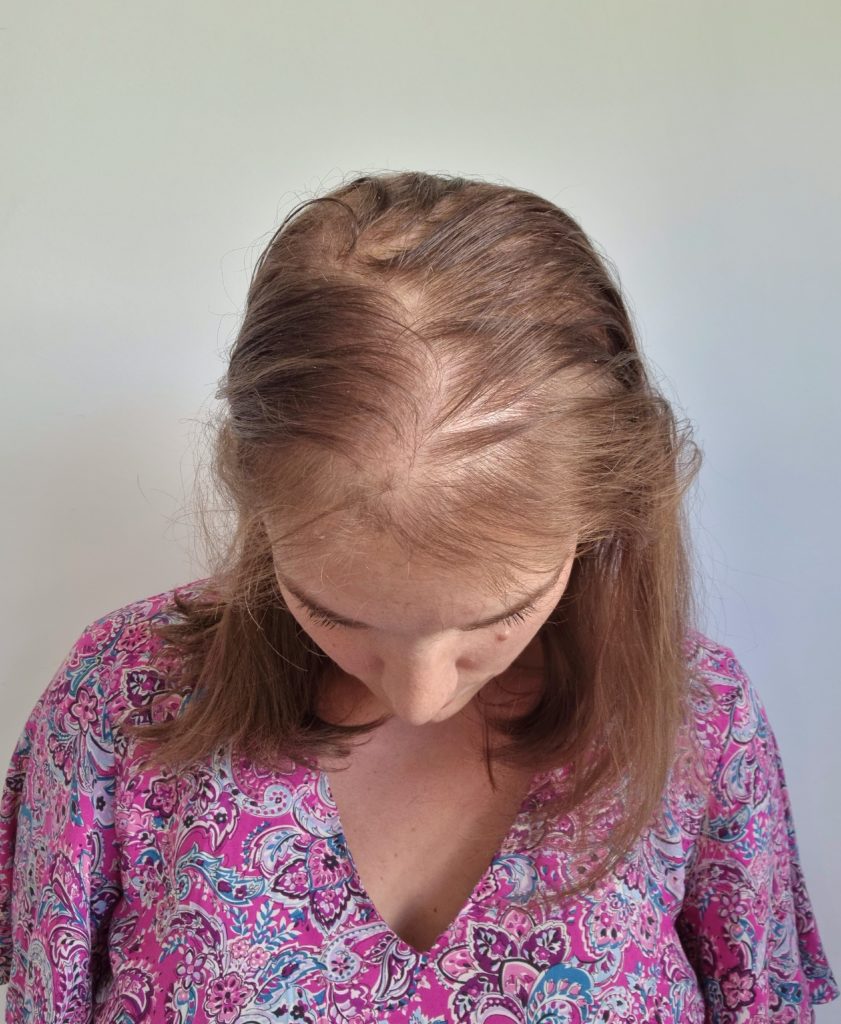
It was becoming increasingly difficult for me to hide it with thickening powder, especially when I was filming my YouTube videos. That's when I remembered my promise. I told myself it was time to take the plunge and visit a wig store.
This step is not easy. I am ashamed to call, ashamed to go there, ashamed to be seen in front of the store on the street, ashamed to go in... but I did it!
A disastrous first fitting session!
I started doing some research and went to a store in Paris that I found on Google. I went there with my partner and my daughter, who was about a year old at the time. I remember thinking, "Poor baby, she has a mom who goes to a wig store." I know that thought is ridiculous. There's no shame in that. But that's how I felt.
The store wasn't actually on a street, but at the back of a courtyard. That should have reassured me, but it actually reinforced my idea that I was doing something shameful. I felt like I was going to a brothel or a sex shop, in short, something you really want to hide.
I was greeted rather coldly by a saleswoman, who showed me into a small room measuring barely 3 square meters, with no windows. There was no wallpaper or paint on the walls, as in a traditional living room. It was very messy, like a room used for storing stock. I remember feeling like I was walking into a storage closet!
The saleswoman went to get me a topper, brought it to me, and left the room. I don't really understand what's happening to me at that moment. She doesn't give me any advice or help me put it on. So I find myself alone with a product in my hands that doesn't suit me at all. The hair is wavy and orange, Dalida color! It's also extremely shiny. It looks like synthetic hair. I try to position the product on my head. The result is disastrous. I feel like they got it from a thrift store or a Halloween costume shop (or Dalida). My partner looks at me with wide eyes. Fortunately, the ridiculousness of the situation makes me laugh.
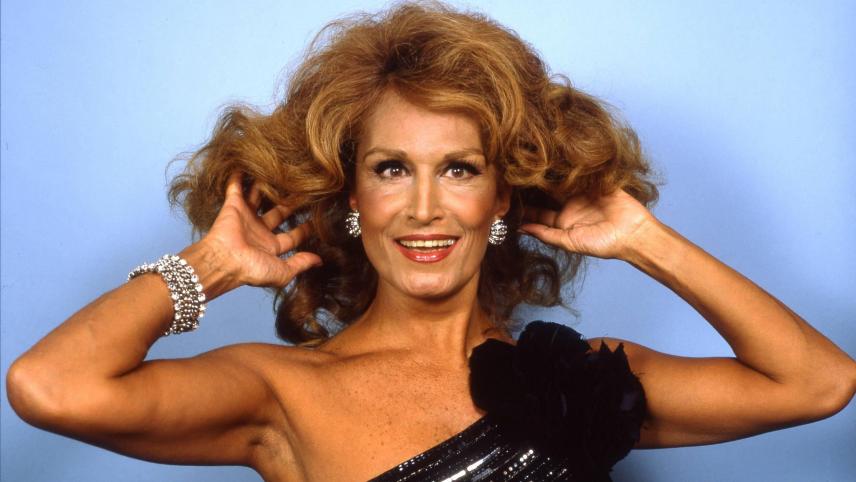
When the saleswoman returns, I tell her that the color is really too different from mine. She tells me that this is the only one available. I find her extremely cold. I decide to leave. Out on the street, I feel like crying. It's not just a bad fitting. For me, it's also the only solution I had to deal with my fading alopecia. I really had to take the blow.
One year later...
After this disastrous episode, I didn't know what to think. The brand I went to wasn't one of the market leaders. They were supposed to be a little cheaper, which is why I chose them. I tell myself that maybe that was the problem and that there are better products out there somewhere.
One day at work, a young colleague with beautiful hair looks at my thinning scalp while I'm talking during the coffee break. I can see in her eyes that she's wondering about and concerned for the state of my scalp. It's humiliating and a real wake-up call for me. I realize that I'm at a stage where others are now noticing. I can't stay like this. As long as I was the only one who saw it, it was fine. But I couldn't bear the thought of people noticing the problem. So I decided to make another appointment at a wig store and visit one of the market leaders.
This time, the store is right on the street and there is a window display with wigs in front. I remember that I didn't dare go in. I was ashamed that people would see me and wonder why I was going in there. I was ashamed that people would know that I needed this. But I did it!
I find that there are some things that can be quite unsettling when you walk into this type of store as a woman suffering from simple androgenetic alopecia. At the reception desk, there were magazines featuring almost exclusively women who were completely bald due to total alopecia. Or testimonials from women with cancer.
I understand, of course, that it is important for women facing these issues to be represented. But I would also have liked to see women with simple androgenetic alopecia. There were pages on toppers, suitable for women with "fine hair." But the models clearly did not have androgenetic alopecia. This made me feel like I didn't belong in this store, like I had no right to be there.
I felt like I was entering a world closely associated with illness, and that wasn't a very reassuring or positive feeling for me. I think that even for women who are ill or suffer from total alopecia, things should be presented differently so that they too can have a better experience.
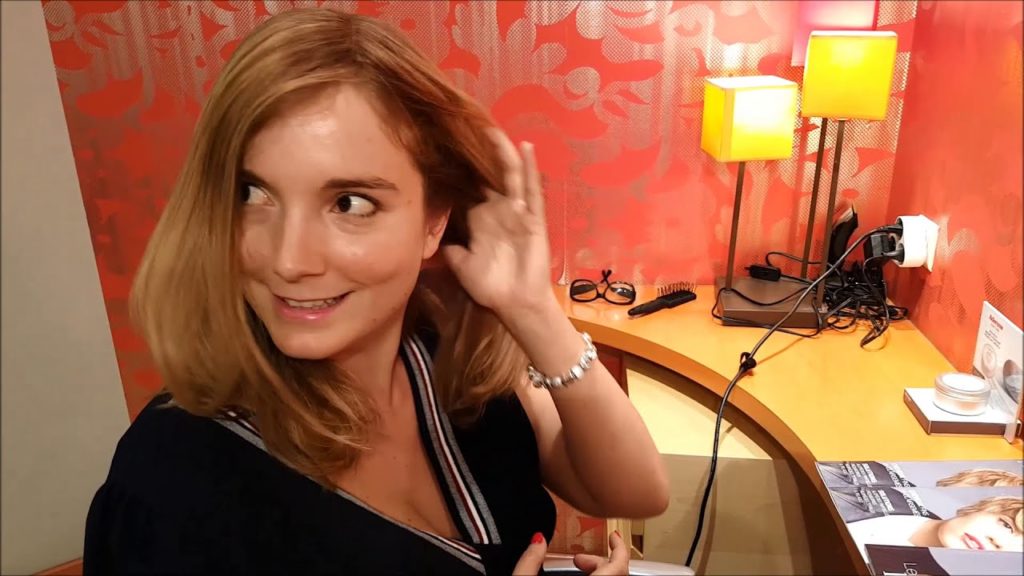
I am then greeted by a young saleswoman, whom I find very friendly this time. She offers me two toppers. Neither is really my color, but at least there is a blonde one. Remember, I was still recovering from the trauma of the Dalida hairstyle! So I was willing to tolerate a lot. The blonde is much blonder than my hair. I'm a dark blonde to begin with, and this is a very light blonde, like the color of the singer Angèle.
The saleswoman helps me position the product. At first, I don't recognize myself. I think it looks okay, but I can see it and it looks like a lot of hair. I think it changes my face and I think everyone will see the difference. The sales assistant is very professional and reassures me. She tells me that I just need to get used to it. And it's true that after about twenty minutes with the product on my head, I start to get used to the look.
I find that the topper look much better. I remember thinking to myself that this is how I should always have looked!
That thishair topper finally allowedhair to be my true self! The person who shouldn't have suffered from alopecia. The person who could have been attractive...
It was from this reflection, on that day, that the slogan for Comme un diadème came about: "Become who you are again." Because that is precisely how I felt.
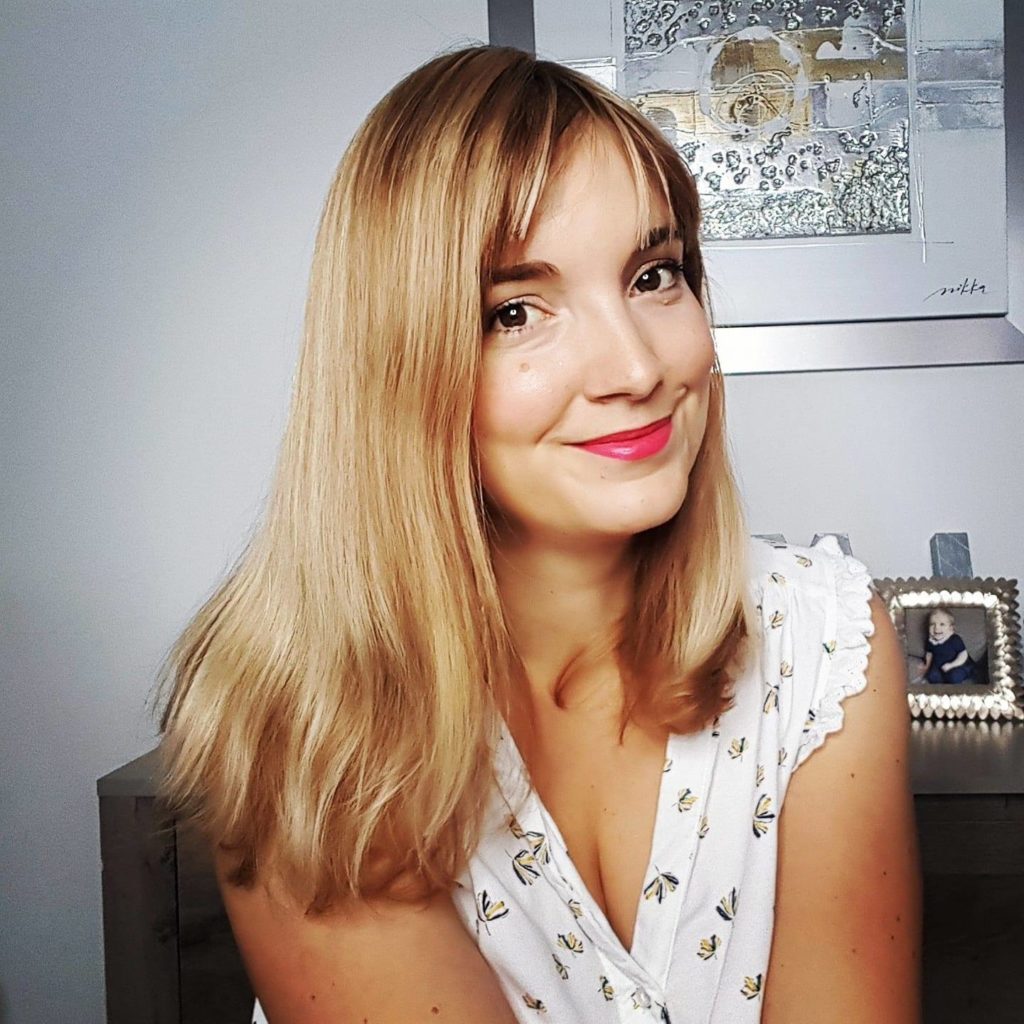
A few weeks later, I adopted thishair topper hair it completely changed my life and my relationship with alopecia.
However, looking back, I now know that it wasn't the right product for me. The color was too different from my own, I had to lighten my hair several times and it still didn't blend in well. In addition, the base size was really too small, given that I have very diffuse and extensive alopecia. All of this meant that the product was actually quite noticeable. So I quickly had to switch to a silk top product with a larger base. But I don't regret this first experience. It was this experience that made me want to make videos on my YouTube channel about the subject. It was this first topper brought me into the fabulous world of toppers .
Please feel free to share your first experience withhair topper in the comments section. I would love to hear from you!
Find toppers and wigs in the store:
https://commeundiademe.com/store/
Discover the YouTube channel of Comme un diadème:
https://www.youtube.com/channel/UCgFJ9SejriuuyUGDZ6GT9kA?app=desktop


Hello,
I would like to purchase ahair topper hair your store.
But which base should I consider?
I see 18 or 20...
Thank you for your response.
Best regards.
Sophie.
Hello Sophie, Send me photos of your alopecia to contact@commeundiademe.com and I will advise you. But basically, I recommend 20×20 if the alopecia is extensive. If the alopecia is very moderate, you can choose between 18×18 and 20×20. Best regards,
Laure
Hello,
I would like to know if toppers , which are sometimes kept for six months, have any negative side effects on the real hair that is covered and suffocated by the topper.